
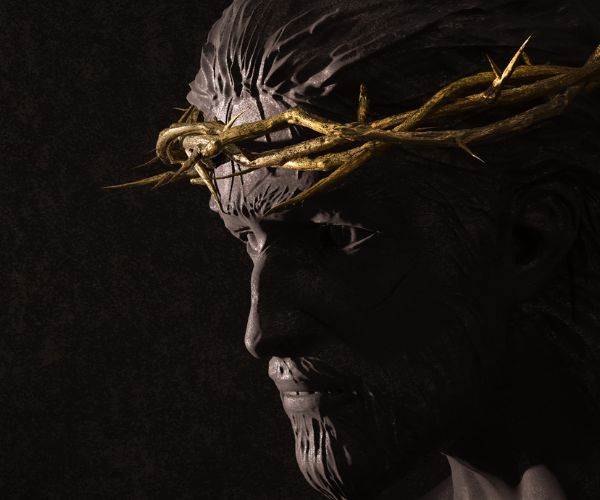
The ‘Solemnity of Our Lord Jesus Christ, King of the Universe’, commonly known as the ‘Feast of Christ the King’, stands as one of the most theologically rich celebrations in the Christian liturgical calendar. Established by Pope Pius XI in 1925 through the encyclical Quas Primas, this feast day invites believers to contemplate the universal sovereignty of Christ while challenging contemporary understandings of power, authority, and kingship. As the final Sunday of Ordinary Time before Advent begins, it serves as a liturgical bridge, looking both backward at Christ’s earthly ministry and forward to his promised return in the future.
Pope Pius XI instituted this feast during a tumultuous period in world history, as totalitarian regimes were rising across Europe and secular ideologies increasingly rejected religious authority. Much like our own time. The Pope recognised that humanity needed to be reminded of Christ’s ultimate sovereignty over all nations, governments, and human institutions. The feast was deliberately counter-cultural, asserting that Christ’s kingship transcends all earthly powers and that his reign is characterised not by domination but by love, truth, and justice.
Originally celebrated on the last Sunday of October, the feast was moved to its current position as the final Sunday of the liturgical year following the reforms of Vatican II. This placement emphasises that all of salvation history culminates in Christ’s eternal kingship, and that the entire liturgical cycle points toward the ultimate recognition of his sovereignty.
The concept of Christ’s kingship is deeply rooted in the messianic prophecies of the Tanakh. At Daniel 7:13–14 the prophet envisions:
One like a son of man coming with the clouds of heaven‘ who receives ‘dominion, glory and kingship; all peoples, nations and languages serve him. His dominion is an everlasting dominion that shall not be taken away, his kingship shall not be destroyed.
This prophetic vision establishes the eternal and universal nature of the Messiah’s reign. Isaiah’s prophecies further develop this theme: ‘For a child is born to us, a son is given us; upon his shoulder dominion rests.’ They name him:
Wonder-Counsellor, God-Hero, Father-Forever, Prince of Peace. His dominion is vast and forever peaceful, from David’s throne, and over his kingdom, which he confirms and sustains by judgement and justice, both now and forever (Isaiah 9:5–6).
These passages reveal that the Messiah’s kingship would be characterised by peace, justice, and eternal stability. The Gospel accounts present a paradoxical portrait of Jesus as king. He consistently redefines kingship in ways that subvert earthly expectations. When questioned by Pontius Pilate, Jesus declares:
My kingdom does not belong to this world. If my kingdom did belong to this world, my attendants would be fighting to keep me from being handed over to the Jews. But as it is, my kingdom is not here (Jn 18:36).
This statement reveals the transcendent nature of Christ’s sovereignty: it operates according to different principles than worldly power structures. Jesus further clarifies his mission in the same dialogue:
For this I was born and for this I came into the world, to testify to the truth. Everyone who belongs to the truth listens to my voice (Jn 18:37).
Here, Christ defines his kingship in terms of truth-bearing and truth-revealing. His authority rests not on military might or political manoeuvring but on the power of divine truth to transform hearts and minds.
Throughout the Gospels, Jesus teaches about the nature of his kingdom using parables. In Matthew 13, he describes the kingdom of heaven through multiple images: a mustard seed that grows into a great tree, yeast that leavens the entire batch of dough, a treasure hidden in a field, a pearl of great price. These parables suggest that Christ’s kingdom, while initially appearing small and insignificant, possesses transformative power that gradually permeates and changes everything it touches. Perhaps most powerfully, Jesus redefines the exercise of authority itself:
You know that the rulers of the Gentiles lord it over them, and the great ones make their authority over them felt. But it shall not be so among you. Rather, whoever wishes to be great among you shall be your servant; whoever wishes to be first among you shall be your slave. Just so, the Son of Man did not come to be served but to serve and to give his life as a ransom for many (Mt 20:25–28).
This teaching revolutionises the concept of kingship, identifying true authority with self-sacrificing service rather than domination.
The supreme paradox of Christ’s kingship is revealed most fully in his passion and crucifixion. The inscription placed above his head on the cross: Jesus of Nazareth, King of the Jews, was intended as mockery but proclaimed a profound truth. The cross itself becomes his throne, and his crown is woven from thorns. As Jesus hangs dying between two criminals, one of them recognises his true nature: ‘Jesus, remember me when you come into your kingdom.’ Jesus responds with the promise: ‘Amen, I say to you, today you will be with me in Paradise’ (Lk 23:42–43). This exchange reveals that Christ’s kingship extends even to those whom society has rejected and condemned. The Gospel of John emphasises Jesus’ royal dignity even in his suffering:
So Pilate said to him, ‘Then you are a king?’ Jesus answered, ‘You say I am a king. For this I was born and for this I came into the world, to testify to the truth’ (Jn 18:37).
Jesus neither denies nor embraces the political connotations of kingship but reframes the concept entirely around his mission of truth-bearing. Christ’s resurrection vindicates his claim to kingship and demonstrates his victory over sin and death. In Matthew’s Gospel, the risen Christ declares: ‘All power in heaven and on earth has been given to me’ (Mt 28:18). This assertion of universal authority is no longer veiled in parables or obscured by the limitations of his earthly ministry. The resurrection reveals that Christ’s kingdom is not merely a future hope but a present reality that has already begun. The book of Revelation presents the culminating vision of Christ’s kingship:
Then I saw the heavens opened, and there was a white horse; its rider was called ‘Faithful and True.’ He judges and wages war in righteousness … He has a name written on his cloak and on his thigh, ‘King of kings and Lord of lords’ (Rev 19:11, 16).
This apocalyptic imagery portrays Christ as the ultimate sovereign whose authority supersedes all earthly powers.
The Franciscan spiritual tradition offers a particularly rich lens through which to contemplate Christ’s kingship. Francis of Assisi’s own life and teachings provide profound insights into what it means to serve Christ as King. Francis was captivated by the humility of God. He marvelled that the King of the Universe would choose to enter the world not in a palace but in a stable, born to a poor family in an obscure town. In his writings, Francis repeatedly emphasises the self-emptying love of Christ:
O sublime humility!
O humble sublimity!
The Lord of the universe, God and the Son of God,
so humbles Himself that for our salvation
He hides Himself under an ordinary piece of bread!
Brothers, look at the humility of God,
and pour out your hearts before Him!
Humble yourselves that you may be exalted by Him!
Hold back nothing of yourselves for yourselves,
that He Who gives Himself totally to you
may receive you totally! (LtOrd)
For Francis, Christ’s kingship is inseparable from his poverty. The Incarnation itself is the supreme act of royal condescension: the King of Heaven assuming the poverty of human flesh. Francis saw in Bethlehem’s manger and Calvary’s cross the same divine humility. He understood that Christ does not rule through coercion or force but through the magnetic attraction of love and the compelling witness of self-sacrificing service.
Franciscan theology, particularly as developed by Saint Bonaventure and later by Blessed John Duns Scotus, emphasises the cosmic scope of Christ’s kingship. In the Franciscan vision, Christ is not merely the redeemer of humanity but the centre and purpose of all creation. The Incarnation was not simply God’s response to sin but the eternal intention of divine love: creation exists so that God might share divine life in and through the human nature of Jesus Christ. This perspective gives profound meaning to the hymn in Colossians:
He is the image of the invisible God, the firstborn of all creation. For in him were created all things in heaven and on earth, the visible and the invisible … All things were created through him and for him. He is before all things, and in him all things hold together (Col 1:15–17).
Christ’s kingship, in the Franciscan view, extends to every atom of creation, every star in the sky, every creature on earth.
Francis chose to call his followers ‘Friars Minor’, lesser brothers. This choice reflects his conviction that following Christ the King means embracing minority, serving others, and rejecting worldly pretensions to power and status. Francis took Jesus’ words about servants and slaves with radical seriousness. If the King came as a servant, then those who follow Him must likewise embrace servanthood. This Franciscan emphasis on minority challenges contemporary culture’s obsession with status, power, and dominance. Recognising Christ as King means recognising that the values of his kingdom are inverted compared to worldly values. The last are first, the humble are exalted, the poor are blessed, and the powerful are brought low.
Francis’ famous Canticle of the Creatures (begun in 1224/1225 and completed just before he died in October 1226), celebrates all creation—imaged in Brother Sun, Sister Moon, Brother Wind, Sister Water etc.—as praising and glorifying the Creator. This vision has profound implications for understanding Christ’s kingship today. If Christ is King over all creation, then humanity’s relationship with the natural world must reflect reverence, stewardship, and care rather than exploitation and domination. The ecological crisis facing our planet calls for renewed recognition of Christ’s sovereignty over creation. When humans act as though we are absolute masters of nature, we usurp Christ’s rightful kingship. The Franciscan tradition invites us to see all creatures as our brothers and sisters, subjects together under the loving reign of Christ the King.
In our contemporary context, the Feast of Christ the King carries urgent prophetic significance. In an age of extreme nationalism, authoritarianism, and ideological polarisation, affirming Christ’s universal kingship challenges all attempts to absolutise human political systems or leaders. No president, prime minister, or political party can claim ultimate authority. All human power is provisional, limited, and accountable to a higher sovereign.
This feast reminds believers that their primary allegiance is to Christ and his kingdom, not to nation, tribe, or political faction. When earthly authorities demand what belongs to God, Christians must respond as Peter did: ‘We must obey God rather than men’ (Acts 5:29). At the same time, recognising Christ as King does not mean withdrawing from civic engagement. Rather, it means bringing the values of Christ’s kingdom, justice, mercy, peace, truth, into the public square and working to make earthly societies more reflect the reign of God.
On a personal level, the Feast of Christ the King invites profound examination of what truly rules our hearts. Do we give Christ genuine sovereignty over our decisions, desires, and daily lives? Or do we compartmentalise faith, giving Christ Sunday morning but reserving the rest of the week for other allegiances: career, wealth, comfort, status, pleasure? True acknowledgment of Christ’s kingship requires ongoing conversion, the daily surrender of our will to his, and the gradual transformation of our values to align with his kingdom. This is not oppressive servitude but liberating service. As Saint Augustine wrote, ‘You have made us for yourself, Lord, and our hearts are restless until they rest in You’. (Confessions 1.1.1). Only when Christ reigns in our hearts can we experience the peace, joy, and freedom his kingdom offers.
The feast also directs our attention to the future consummation of Christ’s reign. While his kingdom is already present, it is not yet fully realised. We live in the tension between the ‘already’ and the ‘not yet’. Christ has won the victory over sin and death, but we still await the day when
… every knee should bend … and every tongue confess that Jesus Christ is Lord (Phil 2:10–11).
This eschatological dimension provides hope in difficult times. When injustice seems to triumph, when suffering appears meaningless, when evil appears unstoppable, the Feast of Christ the King reminds us that history is moving toward a conclusion in which Christ’s loving sovereignty will be universally recognised and his justice will prevail. This hope does not justify passivity but rather energises Christian witness and service, knowing that our ‘labour is not in vain in the Lord’ (1 Cor 15:58).
The Feast of Christ the King celebrates a kingship unlike any other: a sovereignty exercised through love rather than coercion, through service rather than domination, through self-sacrifice rather than self-aggrandisement. It invites believers to reimagine power, authority, and greatness according to the pattern revealed in Jesus Christ.
From a Franciscan perspective, Christ’s kingship is inseparable from his poverty, his humility, and his cosmic significance. To crown Christ as King is to embrace the minority of the Gospel, to reverence all creation as subject to his loving reign, and to find in the crucified and risen Lord the true meaning of power and glory.
In our contemporary world, torn by conflict, inequality, and ecological crisis, the message of Christ the King remains urgently relevant. It challenges every form of idolatry: political, economic, technological, that would claim absolute authority over human life. It calls believers to a countercultural way of living that prioritises service over status, compassion over competition, and eternal values over temporal gains.
As we celebrate this feast at the culmination of the liturgical year, we are invited not merely to acknowledge Christ’s sovereignty in theory but to submit every aspect of our lives to his loving rule. We are called to become citizens of his kingdom, ambassadors of his peace, and witnesses to his truth. In doing so, we participate in the greatest revolution in human history: the transformation of the world through self-giving love, the very love revealed in Christ the King, who reigns forever and ever. Amen.